
How to Verify a Company's Financial and Operational Health Before Doing Business
28-Aug-26
Financial credibility of businesses across the globe has never been under such scrutiny as it is nowadays. With risk-driven variables and components that come with business partnerships, contracts, and stakeholding, standardised forms of risk evaluation have become a crucial asset for businesses. D&B Rating is a standardised identifier which help lenders, partners, and buyers properly assess a company’s credibility before making decisions.
The indicators from D&B ratings go far beyond surface-level semantics and reveal a business's resilience and likelihood of facing potential financial distress. So, what is D&B rating, and how can it help your business mitigate risks? Let’s find out.
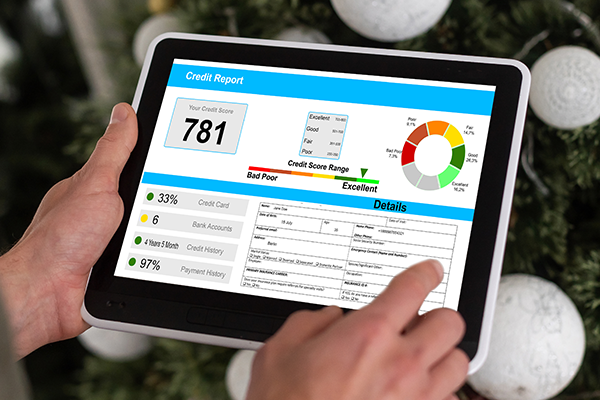
D&B Rating is, in a nutshell, a financial indicator developed by Dun & Bradstreet to reflect a company’s financial strength and risk condition. Unlike a single score, it consists of two parts: the Financial Strength Indicator (based on Tangible Net Worth, e.g., 5A, 1A) and the Composite Credit Appraisal (a risk indicator ranging from 1 to 4). D&B assesses many factors, like net worth, financial statements, company size, and operational scale, to assign this dual-component rating.
It is used widely by businesses and institutions in making procurement or credit-based decisions. The rating also helps understand a company’s financial standing and stability.
Now that we have covered what is D&B rating, let us dive into how critical a role it plays in how a business is perceived. Lenders, suppliers, and corporate buyers rely on the D&B rating to evaluate a company’s operational scale and financial capacity. Credit teams use this rating to assess and set a company’s lending limits. Suppliers use this rating to set payment terms when collaborating with a business. Enterprises use this rating as a reference for vendor qualification during the onboarding process. A strong D&B rating can help businesses unlock better credit access and partnerships. It’ll also ensure the business itself is transparent and accountable where needed.
There are four key components in calculating the D&B rating. Each component informs either the Financial Strength or the Risk Indicator to form a holistic view of a business’s foundations. These components are:
Large enterprises or firms with a high tangible net worth are assigned a higher classification (e.g., 5A), signalling capacity to absorb shocks.
Consistent and on-time payments directly indicate a business’s financial stability and resilience. It improves confidence in your business, having a positive financial perception amongst lenders and suppliers.
Transparency is critical. Data like legal filings, compliance audit checks, reported financials, and disclosures help validate business stability on a much larger scale.
Sector volatility, market conditions, and operational efficiency are factored to contextualise overall financial strength.
All these components are assessed to generate the comprehensive D&B Rating.
Financial maturity and stability are the two core indicators of financial health revealed by the D&B rating. These indicators provide stakeholders with a holistic understanding of a business's financial depth to sustain operations, manage obligations, and support long-term commitments. A weak rating signals a higher perceived risk and limited financial buffers, which can prompt higher scrutiny in partnerships, supplier relationships, and credit approvals.
While both are used to assess financial reliability, D&B Rating and credit scores serve different purposes. Let us take a look at their differences:
Aspect |
D&B Rating |
Credit Score |
|---|---|---|
Primary focus | Financial strength & scale |
Payment behaviour (Speed of payment) |
Scope | Business-wide assessment (Net Worth + Risk) |
Credit repayment history |
Used by | Lenders, buyers, procurement teams |
Lenders, suppliers |
Risk insight | Structural stability & Solvency |
Default likelihood |
A company’s commercial credit score mainly evaluates its repayment behaviour. In contrast, the D&B rating takes a much broader approach, factors in company size (Net Worth) and overall risk. Together, they are complementary. Users get insights into payment discipline (credit score) and financial stability (D&B rating).
Lenders reference the D&B Rating to set credit exposure limits, decide approval thresholds, and structure repayment terms. It helps them align lending decisions with a borrower’s financial capacity rather than relying solely on past payment behaviour.
Procurement teams use the D&B Rating to assess whether a vendor can sustainably deliver on contracts. It helps in reducing supply-chain disruption risk by screening out financially fragile suppliers early in the onboarding process.
Here are a few simple ways in which you can improve your D&B rating and maintain it for better future prospects:
Ensuring consistent, on-time payments demonstrates financial accountability and indicates a disciplined approach to managing your cash flow.
By having clear and accurate financial records, it is easier for businesses to assess their overall health and for others to understand their financial position.
A business with less debt indicates healthier levels of leverage and has a greater ability to meet future obligations.
Regularly updating your business information will provide an accurate assessment of your business's size, structure, and value.
For improving your D&B rating, you must mitigate these common issues:
Late or irregular payments
High levels of outstanding debt
Outdated or incomplete business information
Inconsistent financial reporting
Sudden drops in revenue or cash flow
Frequent changes in ownership or management
Legal filings, liens, or judgments
Operating in a high-risk or volatile industry
A. It depends on the specific indicator. For the D&B Rating (Risk Indicator), a lower number is better (1 indicates minimal risk, 4 indicates high risk). For scores like PAYDEX®, a higher number is better (reflecting prompt payment).
A. It combines a Financial Strength Indicator (derived from Tangible Net Worth/Company Size) and a Risk Indicator (calculated from payment patterns, financials, and public records).
A. Tangible Net Worth, payment behaviour, quality of financial disclosures, operational stability, and industry conditions.
A. It is highly effective when used alongside broader financial and risk assessments, leveraging global data to predict instability.
A. Yes. Consistent, on-time payments positively influence the Risk Indicator component of the overall D&B Rating.

Vice President - Commercial Business
Dun & Bradstreet India
Dun & Bradstreet, the leading global provider of B2B data, insights and AI-driven platforms, helps organizations around the world grow and thrive. Dun & Bradstreet’s Data Cloud, which comprises of 455M+ records, fuels solutions and delivers insights that empower customers to grow revenue, increase margins, build stronger relationships, and help stay compliant – even in changing times.

Gain your stakeholders confidence for increased business opportunities and establish your brand credibility.

Get your business noticed in the global marketplace with the global seal of credibility

Accelerate supplier evaluations, mitigate current and future risk, and improve business resilience all in one powerful supplier risk solution.

 Contact us