
What Early-Warning Signals Do You Track to Anticipate Supplier Risk?
10-Oct-26
Ask most business professionals to define the difference between ESG and sustainability, and you will likely get a pause or a circular answer. The confusion is understandable; both concepts deal with environmental responsibility, social conduct, and governance practices. But treating them as the same thing creates real problems for organizations trying to build strategy, meet disclosure requirements, and demonstrate long-term value creation. The distinction is worth getting right.
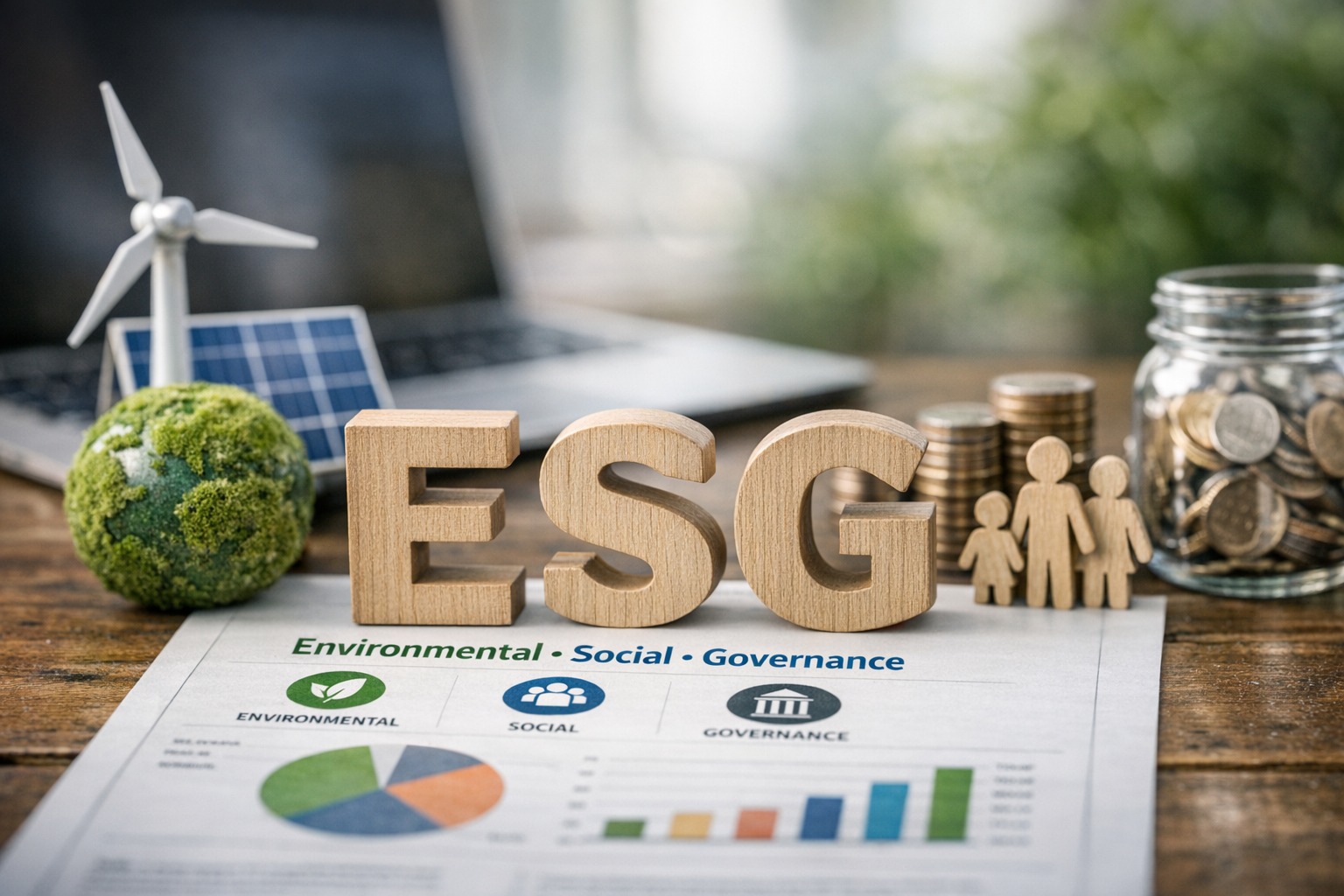
At its core, ESG refers to a set of environmental, social, and governance factors that help evaluate how a company manages risks, opportunities, and business practices that sit outside traditional financial metrics. Think of it as a structured lens, one that brings areas like carbon emissions, labour policies, supply chain responsibility, data privacy, and corporate governance into focus.
The audience for ESG information is broad. Investors, regulators, lenders, procurement teams, and business partners all draw on it, each for slightly different reasons, but with a shared interest in understanding how a company handles non-financial factors that can affect its risk profile, reputation, and long-term value.
Sustainability in business is a broader idea and a harder one to pin down precisely. At its most fundamental, it refers to an organization’s ability to create long-term value whilst balancing environmental stewardship, social responsibility, and economic viability.
Where ESG is structured and measurable, sustainability is more principle-led, less about what gets reported and more about how a company intends to create responsible long-term value for society, the environment, and the business itself.
The core difference between ESG and sustainability is not about which matters more, it is about what each one is designed to do. ESG is a structured lens: built for measurement, disclosure, benchmarking, and risk assessment. Sustainability is the broader concept underneath it, concerned with long-term impact and responsible growth.
The confusion between ESG vs sustainability is not arbitrary, it is built into the way the concepts relate to each other. Both address environmental impact, social responsibility, ethical conduct, and governance practices, making the overlap genuine rather than superficial.
The line blurs further when ESG disclosures are constructed directly from sustainability priorities at which point the two look almost identical on paper. Recognizing how they depend on each other is what allows businesses to use both effectively.
ESG consists of three main components, each addressing a distinct area of business responsibility and while often discussed separately, in practice they overlap considerably.
Environmental factors cover a company’s impact on the natural environment: emissions, energy consumption, resource use, waste, water, and climate risk.
Social factors address relationships with employees, customers, suppliers, and communities, labour practices, human rights, health and safety, data privacy, and supply chain responsibility all sit within this pillar.
Governance covers the structures that determine how a company is led and held accountable: ethics, compliance, transparency, board oversight, and risk management.
Taken together, these components give stakeholders a coherent way to assess how organizations manage non-financial risks, not as abstract ideals, but as operational realities.
The framing of this question is part of the problem. Asking which matters more between ESG vs sustainability assumes a competition that does not really exist, the two are not rivals, they are different instruments serving different purposes.
ESG tends to attract more near-term attention, driven by investor expectations, regulatory developments, and supply chain scrutiny. That pressure is real. But ESG activity without a genuine sustainability foundation tends to drift towards box-ticking; the reporting looks credible, but the strategy behind it is thin.
ESG metrics and reporting serve a straightforward purpose: turning business practices into outcomes that can be measured and communicated consistently. Without this infrastructure, sustainability commitments remain largely aspirational, difficult to verify and harder to compare across organizations or sectors.
GRI, SASB Standards, ISSB/IFRS Sustainability Disclosure Standards, ESRS, and CDP are among the most widely referenced frameworks. Credibility, however, depends on data quality, methodological consistency, and where the stakes are high enough, independent assurance. Reporting that lacks these foundations can distort the picture it is meant to build.
ESG and sustainability are relevant across industries, but scrutiny is not evenly distributed. Energy, manufacturing, transportation, agriculture, and mining face pointed questions about emissions, resource consumption, and climate-related risks. Financial services companies are assessed on governance quality, responsible lending, and financed emissions. Technology companies face growing pressure on data privacy, AI ethics, and energy demands, areas barely part of the ESG conversation a decade ago.
ESG data quality is one of the most frequently cited barriers, businesses often work with data that is inconsistent across business units, difficult to obtain from suppliers, or not captured in a form that meets disclosure requirements. Aligning ESG goals with business strategy is equally challenging when short-term financial pressures pull against long-term sustainability objectives. Strong governance, integrated data systems, and clear cross-functional ownership are necessary conditions, not optional extras.
The relationship between ESG and sustainability is shifting, sustainability is moving from a standalone initiative into a core operating principle, with ESG frameworks evolving alongside it. Reporting is becoming more standardized and data-driven, making performance easier to compare and harder to obscure.
The irony is that technologies like AI and automation, used to improve ESG data collection and monitoring, introduce new ESG considerations of their own: data privacy, algorithmic bias, cybersecurity, and energy consumption.
The distinction between ESG and sustainability is not merely academic, it has real consequences for how organizations plan, report, and ultimately perform. Strategy without measurement is hard to defend. Measurement without strategy is easy to game.
The standards are rising, stakeholder expectations are sharpening, and the tolerance for vague commitments is narrowing. For businesses willing to treat both ESG and sustainability with the rigour they each deserve, that is less a threat than an opportunity to build something genuinely durable.

Director - ESG and Climate Change
Dun & Bradstreet India
Dun & Bradstreet, the leading global provider of B2B data, insights and AI-driven platforms, helps organizations around the world grow and thrive. Dun & Bradstreet’s Data Cloud, which comprises of 455M+ records, fuels solutions and delivers insights that empower customers to grow revenue, increase margins, build stronger relationships, and help stay compliant – even in changing times.

Unlock sustainable growth with D&B ESG advisory

 Contact us