
Supplier Risk Analysis and Segmentation
14-Oct-26
Supply chains have outgrown human oversight. Modern organizations might depend on thousands of external partners, vendors, and distributors. You have to monitor their financial health, cyber posture, and regulatory compliance constantly. But traditional oversight fails here. It is too slow.
As networks expand, AI is stepping in to spot trouble before it hits your balance sheet.
Traditional third-party risk management commonly relies on manual due diligence, periodic analyses, and infrequent data which is received upon supplier onboarding. Though these techniques provide a starting point in the understanding of vendor risk, they tend to be ineffective in capturing changes which occur during the business relationship.
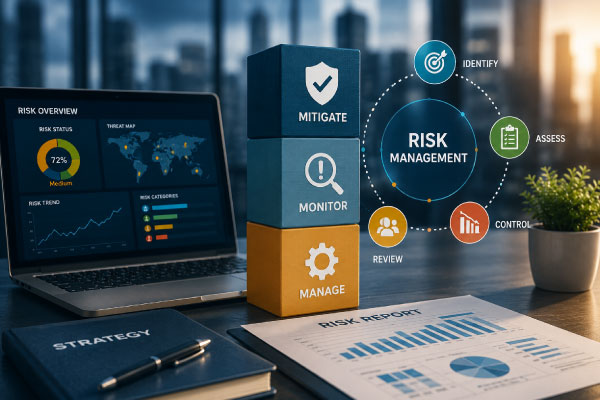
Third-party risk is dynamic in nature, depending on financial instability, regulatory actions, cyber-attacks, ownership, changes, geopolitical influences and operational failures. Periodic reviews may cause organizations to be blind to the developing risks until they begin to affect business performance.
Additionally, the absence of unified sources of data and manual processes further complicates the upkeep of risk, procurement, and compliance teams as pertinent teams continue to grow third-party ecosystems.
Forward-thinking risk officers are discarding reactive models. They want continuous intelligence. By deploying artificial intelligence, organizations process vast streams of unstructured text and structured datasets simultaneously. This shift automates exhausting administrative work and surfaces hidden threats.
Vendor due diligence is typically described as the gathering of data by using different internal and external sources, reviewing documentation and verifying business information. These manual procedures can be time and resource-intensive, particularly for organizations that engage many suppliers.
This is made easier by AI, which automatically collects, validates and analyses the right data using credible sources. It can promptly identify anomalies, point to the lack of information, and contribute to more thorough evaluations of the suppliers. This will enable organizations to carry out due diligence in a more effective way and improve the quality and consistency of risk evaluation.
Static scores fail when circumstances change. Artificial intelligence recalibrates risk metrics continuously by ingesting live data feeds. If a logistics partner faces a sudden lawsuit or a spike in negative press, their score adjusts immediately. Models digest financial filings, news sentiment, and regulatory fines. Together, these paint a highly accurate picture of current stability. Risk managers can then target their interventions precisely where exposure peaks.
The possibility of detecting small trends that may indicate the beginning of a risk is one of the greatest benefits of AI, as it is able to detect a problem earlier than standard reviews. Machine learning models can be used to analyze large amounts of data to identify anomalies, behavioural changes and correlations that may hint at the possibility of increasing supplier or compliance risk.
The first sign of financial deterioration, regulatory intrusion, cybersecurity threats, or operating risks enables businesses to detect the underlying issues at an earlier stage and implement the required mitigation measures to ensure they do not affect the continuity of their operations.
Risk profiles do not stay the same. The suppliers and business partners are also prone to regular changes that may influence their financial stability, regulatory status, operating capacity, or ownership composition.
AI enables real time monitoring where it analyses incoming data and sends alerts when a set risk level is reached, or an anomaly is observed. Rather than waiting until an annual or quarterly review, organizations can access the evolving third-party risks in real-time, responding more swiftly and engaging in more proactive risk management.
AI and third-party risk management are a pairing that enables organizations to shift to risk intelligence and not merely respond to compliance. Data analysis can be automated to gather and analyze data in real time, enabling businesses to make faster, more informed decisions and minimize manual effort.
AI also increases operational efficiency, accelerating the evaluation of vendors, concentrating on high-risk relationships, and spending less time on research to identify potential issues. Continuous intelligence enhances regulatory compliance as well, since it will provide greater detail on the performance of suppliers, financial stability, and emerging external risks.
The more complex the third-party ecosystems are, the more resilient organizations are made by leveraging AI to identify the vulnerabilities sooner and respond to the changing business environment faster. It not only reduces exposure to risk but also aids in ensuring that better procurement decisions are made, improves governance and creates more sustainable business relationships.
Plugging in an algorithm solves nothing on its own. Leaders must first pinpoint exactly where machine learning will add value. Will it overhaul due diligence or focus on continuous tracking?
Data quality dictates success. Algorithms fed disorganized or outdated records will generate flawed insights. You need clean, verified intelligence from robust internal and external networks to train these models properly.
Furthermore, human oversight remains non-negotiable. Software flags the anomaly. A seasoned risk professional interprets the context. True integration means giving your compliance teams better tools. Their judgment isn't replaced. Dun & Bradstreet bridges this gap by merging reliable commercial intelligence with algorithmic monitoring. So, firms can elevate their vetting standards. They can navigate complex global networks with total confidence.
Expanding vendor networks demand agility. Outdated spreadsheets offer none. By moving to continuous assessment and precise scoring, enterprises catch vulnerabilities before they strike. Pairing verified business intelligence with machine learning establishes operational resilience. Dun & Bradstreet also empowers organizations to unlock this predictive capability. Leveraging comprehensive entity data and live analytics keeps your risk framework one step ahead of the market.
A. AI automates risk assessment, analyzes large datasets, and helps organizations identify potential vendor risks faster.
A. Traditional methods rely on periodic reviews and manual processes, which may miss emerging risks between assessments.
A. AI can automatically collect, validate, and analyze supplier data, making due diligence faster and more accurate.
A. Yes. AI monitors real-time data, detects anomalies, and sends alerts when risk levels change.
A. AI enhances efficiency, strengthens compliance, improves risk visibility, and enables better decision-making across third-party ecosystems.

Deputy sales head
Dun & Bradstreet India
Dun & Bradstreet, the leading global provider of B2B data, insights and AI-driven platforms, helps organizations around the world grow and thrive. Dun & Bradstreet’s Data Cloud, which comprises of 455M+ records, fuels solutions and delivers insights that empower customers to grow revenue, increase margins, build stronger relationships, and help stay compliant – even in changing times.
Activate data and analytics to control supply chain risk and avoid the consequences of disruption.

Build solid relationships with the right supply chain partners

 Contact us